
Research
My research focuses on designing inherently radiopaque, biodegradable biomaterials that are visible under X-ray, promote tissue repair, and resorb after healing. By combining polymer science, nanocellulose chemistry, and bioceramics, I engineer materials that solve two challenges at once: making implants trackable during surgery and follow-up, and enabling site-specific therapy.
Making implants intrinsically radiopaque removes the need for contrast agents and allows real-time, non-invasive tracking of repair and therapy. Combined with osteogenic and biodegradable behaviour, this aims to reduce secondary surgeries and improve outcomes in orthopaedic and oncologic applications.
Research areas
Regenerative biomaterials
Orthopaedics & craniomaxillofacial repair
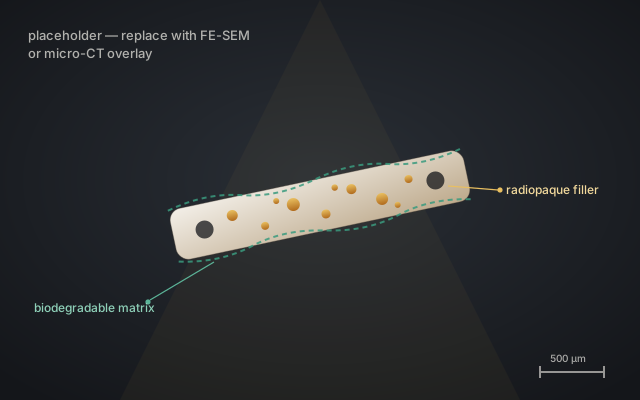
Designing biodegradable, inherently radiopaque biomaterials for orthopaedic and craniomaxillofacial repair. Fixators and bone cements that carry their own X-ray contrast, so implants can be tracked intra-operatively and through follow-up, then resorb as bone remodels.
Themes: radiopacity · bone cement · biodegradation
Theranostics & cancer therapy
Locoregional hepatocellular carcinoma
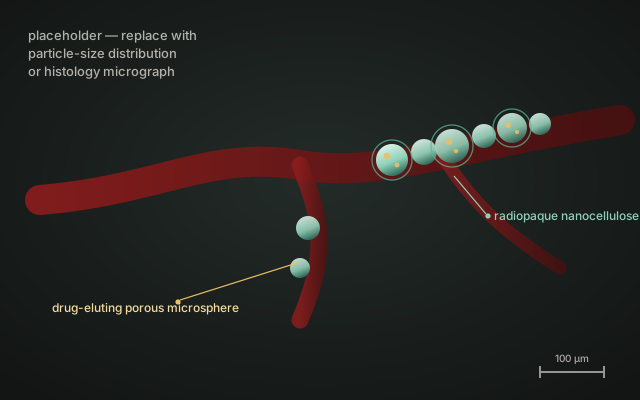
Engineering imageable drug-eluting embolics for locoregional hepatocellular carcinoma therapy. Transarterial chemoembolisation embolics built from nanocellulose extracted from Agave sisalana, combined with drug-eluting porous microspheres so the treated territory is both verifiable and therapeutic.
Themes: nanocellulose · drug delivery · HCC
Periodontal regeneration
Self-setting cements
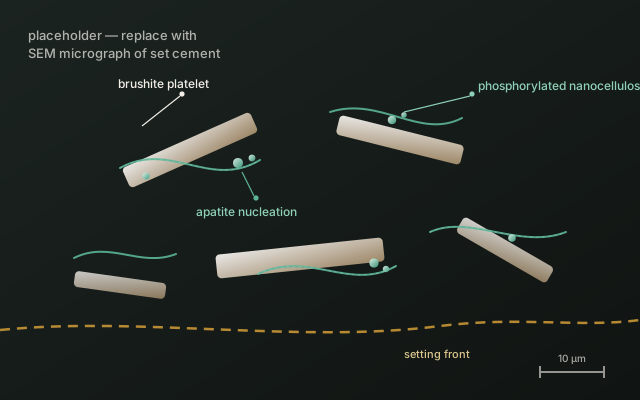
Developing early-biomineralizing nanocellulose–brushite self-setting composites for periodontal repair. Phosphorylated nanocellulose intercalated into brushite so the cement sets fast and starts depositing apatite early, in the moist, acidic environment of a periodontal defect.
Themes: brushite · biomineralisation · nanocellulose
Current projects
- Osteogenic 3D-printable radiopaque fixators - X-ray-visible, early osteogenic fixators for diabetic orthopaedic and craniomaxillofacial repair.
- Radiopaque TACE embolics for HCC - biodegradable imageable embolics enabling locoregional hepatocellular carcinoma therapy, using nanocellulose extracted from Agave sisalana and drug-eluting porous microspheres.
- Nanocellulose–brushite self-setting composites - early-biomineralizing radiopaque cements engineered for periodontal regeneration.
Supervision
Prof. G. S. Sailaja - Regenerative Biomaterials and Theranostics Lab, Cochin University of Science and Technology.
Note on the figures. The three images above are placeholder schematics, clearly labelled as such. Replace the files in
/images/research/with your own FE-SEM, micro-CT or radiograph exports - same filenames, no other changes needed. 16:10 crops work best.